
Rebuilding Balance: Inside the Modern Recovery Journey of Ballet Dancers
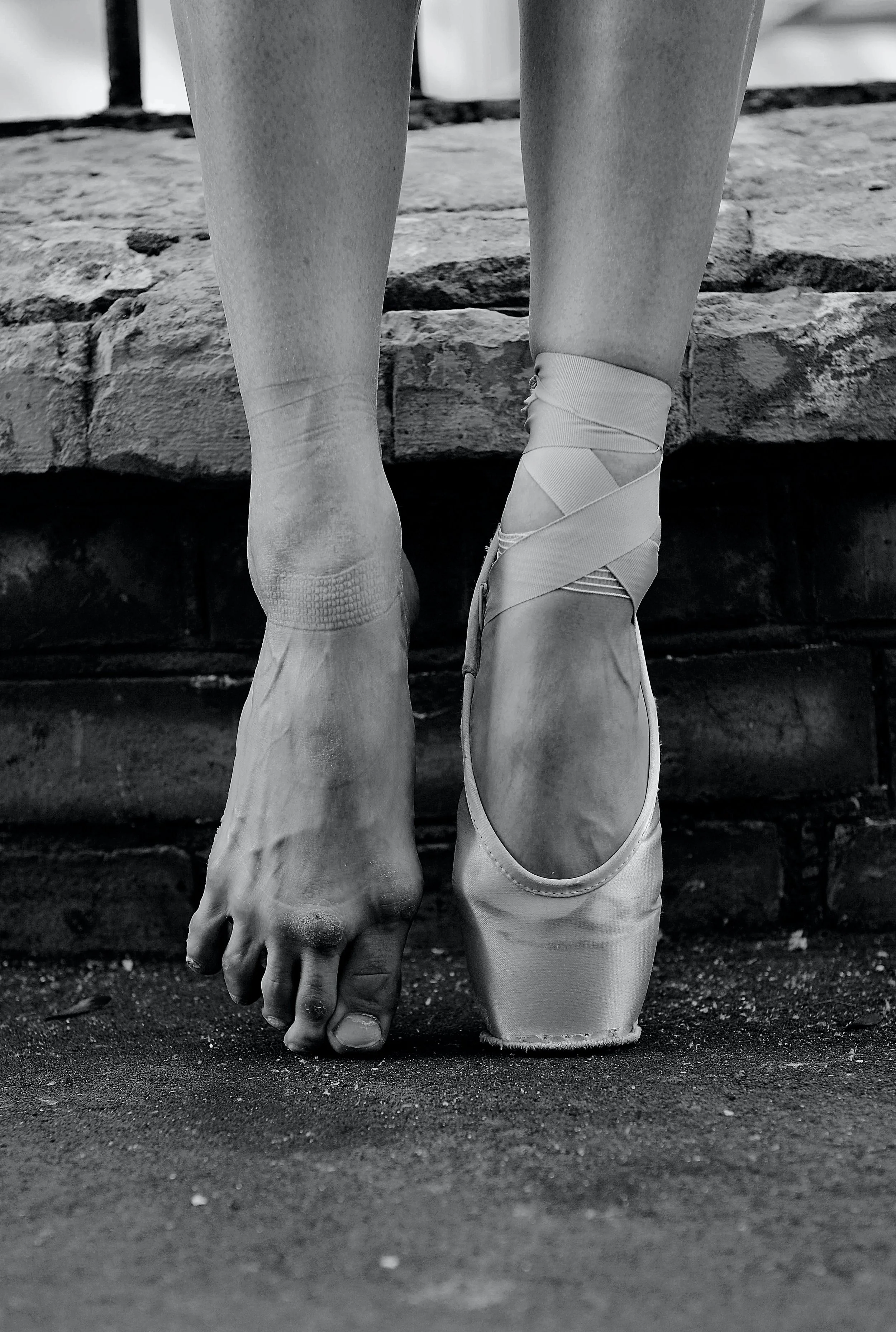
The Art That Tests Anatomy
Ballet merges artistry with athletic precision. Every movement demands controlled power through the foot and ankle, small joints that carry extraordinary load and finesse.
In a prospective three-year review of pre-professional ballet dancers, 61% sustained at least one injury requiring medical attention in a single year, with the ankle and foot most frequently affected. These findings reveal the immense physical strain inherent in ballet and highlight the ongoing need for evolving orthopedic strategies to address its physical demands.
When Grace Meets Force
Behind the effortless illusion of ballet lies intense biomechanics. Studies show that during pointe work, jumps, and landings, vertical ground-reaction forces reach four to six times body weight at the foot. The repetitive nature of relevés, balance holds, and directional changes predisposes dancers to lateral ankle ligament sprains and chronic instability.
These injury patterns remind both clinicians and dancers that long-term stability depends on treating the entire kinetic chain, from the toes and ankles through the knees, hips, and core, rather than addressing the injured joint in isolation.
Rehabilitation as Recalibration
Recovery for dancers is both medical and mechanical. Rehabilitation is increasingly described in the literature as a process of recalibrating balance, strength, and proprioception rather than simply “healing an injury.”
Core principles include:
Early protected motion to maintain joint nutrition and stimulate mechanoreceptors.
Eccentric and intrinsic foot strengthening to restore fine control and prevent recurrence.
Proprioceptive neuromuscular facilitation (PNF) to retrain balance and alignment.
A recent review of ballet-specific rehabilitation protocols concluded that structured, dance-specific progression of load and movement reduces the risk of reinjury and supports a safe return to performance. For the dancer, it means re-learning artistry with anatomical precision; for the surgeon, it highlights the importance of functional recovery beyond structural repair.
The Surgeon’s Role in Restoring Motion
When conservative therapy is insufficient, surgical intervention may be considered for selected conditions affecting the ligaments and tendons that support the joint, with the goal of restoring structural support.
Pre-clinical research on bioresorbable polymer fixation systems demonstrates direct bone–polymer contact and early new bone formation without unwanted inflammatory reactions. For surgeons, these data inform implant choice and technique in anatomically compact regions such as the ankle, which is crucial to dancers’ mobility and precision.
Beyond Recovery: Redefining Movement
True rehabilitation for a dancer means more than closing a wound or fixing a ligament. It’s the re-education of movement itself, restoring the harmony between anatomy and artistry. Through careful surgical planning, evidence-based rehabilitation, and disciplined retraining, many dancers return not only to the stage but to a deeper understanding of how their bodies create motion.
Discover More
As movement-driven disciplines like ballet continue to challenge traditional ideas of recovery, they also raise a sharper question for surgeons and innovators alike: what kind of fixation truly belongs in a body built for motion? That question sits at the center of the work at Surgical Fusion Technologies, where fixation design is shaped not by static testing alone, but by the demands of small joints, repeated loading, and patients whose definition of success is confident movement.
For those interested in how surgical thinking evolves when performance is the goal, this is where the conversation continues.
Learn more about SupraFusion’s approach to fixation design at www.supra-fusion.com.
References
1. Gamboa JM, Roberts LA, Maring J, Fergus A. Injury patterns in elite pre-professional ballet dancers and the utility of screening programs.J Orthop Sports Phys Ther. 2008; 38(3):126–136.
2. Walter HL, Pappas E, Koutedakis Y, Wyon MA. Ground reaction forces in ballet dancers landing in flat shoes versus pointe shoes.J Dance Med Sci. 2011; 15(2):61–64.
3. Glasser L, Pappas E, Wyon MA. Ballet rehabilitation: a novel return-to-sport protocol.Front Sports Act Living.2022; 4:946749.
4. Langhoff JD, Kuemmerle JM, Mayer J, et al. An ultrasound-assisted anchoring technique for fixation of implants to bone: a histological pilot study in sheep.Open Orthop J. 2009; 3:40–47.
5. Heidenreich D, Langhoff JD, Nuss K, et al. The use of BoneWelding technology in spinal surgery: an experimental study in sheep.Eur Spine J. 2011; 20(11):1821–1836.